
Comprehensive Overview
This meticulously designed 25-day birding expedition represents the ultimate Uganda birding experience, systematically covering every major birding destination across the country to target the maximum possible species diversity including all 24 Albertine Rift endemics, countless savannah specialists, forest rarities, and waterbirds that have made Uganda Africa's premier birding destination with over 1,080 recorded species. The itinerary follows a logical geographical circuit that minimizes backtracking while maximizing habitat diversity, beginning with the waterbirds and swamp specialists around Entebbe and Lake Victoria, progressing through the savannah ecosystems of Murchison Falls and the northern parks, exploring the montane forests of the Albertine Rift where endemic species occur nowhere else on Earth, and concluding with specialized sites that harbor localized species missed elsewhere.
Uganda's extraordinary avian diversity stems from its unique position at the convergence of East African savannah, West African rainforest, and montane ecosystems, combined with elevation ranges from 620 meters at Lake Albert to 5,109 meters on the Rwenzori peaks, creating ecological niches for an astonishing variety of species within a compact area roughly the size of Oregon or Great Britain. This comprehensive safari ensures you visit every critical birding site including Mabamba Swamp for the iconic Shoebill, Budongo Forest for elusive forest specialists, the Albertine Rift parks (Bwindi, Mgahinga, and Semuliki) for all possible endemics, the northern savannah parks for dry-country species, and specialized wetlands and forests that harbor rarities found in limited locations.
The 25-day timeframe allows for thorough exploration of each destination without exhausting daily rushes, providing multiple opportunities to target difficult species, accommodating the reality that rare birds require patience and often multiple attempts, and building in flexibility for weather conditions that can affect bird activity in tropical forests and high mountains. You'll work with expert Ugandan birding guides whose intimate knowledge of calls, behaviors, microhabitats, and exact locations of specialties dramatically increases success rates—these guides can identify species by song alone, know which fruiting trees attract specific birds, understand seasonal movements, and employ strategies like working mixed feeding flocks that often contain 20-30 species traveling together through the canopy. The itinerary balances intensive birding days with reasonable travel times, focuses morning and late afternoon efforts when bird activity peaks, and strategically positions rest periods during midday heat when tropical birds become less active, while also incorporating some cultural experiences and scenic highlights that enrich the overall journey.
Expected species totals for this comprehensive safari typically range from 650-750+ depending on season (November-April offers Palearctic migrants while June-August provides resident species without migration confusion), weather conditions, individual luck with rare species, and the birder's experience level with tropical identification challenges. The itinerary targets all 24 Albertine Rift endemics (African Green Broadbill, Grauer's Rush Warbler, Shelley's Crimsonwing, and 21 others), northern savannah specialists found only in Kidepo and Pian Upe (Karamoja Apalis, Jackson's Hornbill, Fox Kestrel), western forest species extending from Congo Basin forests (Nahan's Francolin, Congo Serpent Eagle, Lyre-tailed Honeyguide), swamp and wetland specialists (Shoebill, Papyrus Gonolek, White-winged Warbler), and countless widespread but spectacular species that make every day exciting.
The journey represents a significant physical and mental commitment—long drives, challenging forest treks at high elevations, early morning starts, and the concentration required for tropical bird identification—but rewards dedicated birders with a life list boost unmatched by any other single-country destination, intimate knowledge of East African avifauna, and memories of encountering some of the world's most spectacular and sought-after birds in their natural habitats. This is not a casual wildlife safari with incidental birding, but rather a serious ornithological expedition designed for passionate birders willing to invest time, energy, and focus into experiencing Uganda's extraordinary avian diversity comprehensively and systematically.
Day 1: Arrival Entebbe and Botanical Gardens Birding
Upon arrival at Entebbe International Airport, you'll be met by your expert birding guide who will accompany you throughout the safari, and after settling into your lakeside hotel, you'll begin birding immediately at the Entebbe Botanical Gardens along Lake Victoria's shores. These accessible 40-hectare gardens provide an excellent introduction to Ugandan birds with over 115 recorded species including forest, woodland, and waterbird habitats within walking distance. Target species include Great Blue Turaco calling from canopy perches, Ross's Turaco, Palm-nut Vulture, African Grey Parrot flying to roost in late afternoon, and the lakeside areas attracting African Fish Eagle, Pied Kingfisher, and Malachite Kingfisher. This gentle first afternoon allows jet-lag recovery while recording 40-60 species and preparing equipment for the intensive birding ahead.
Day 2: Mabamba Swamp - Shoebill and Papyrus Specialists
Today features an early departure for Mabamba Swamp, the most reliable location globally for observing the prehistoric Shoebill in natural papyrus habitat. You'll glide through narrow channels in traditional dugout canoes, searching for this massive, statue-like bird while also encountering papyrus endemics including Papyrus Gonolek (heard more easily than seen), White-winged Warbler, Northern Brown-throated Weaver, and Papyrus Yellow Warbler. The swamp's channels host Blue-breasted Bee-eater, numerous kingfisher species, African Jacana walking on floating vegetation, and raptors including African Marsh Harrier patrolling overhead. After your successful Shoebill encounter and recording 50-70 species, you'll return to Entebbe for lunch and afternoon birding at nearby wetlands or Entebbe peninsula for additional waterbirds.
Day 3: Lake Mburo National Park - Acacia Savannah Specialists
Departing Entebbe early, you'll drive 4-5 hours west to Lake Mburo National Park, Uganda's smallest savannah park but harboring species found nowhere else in the country's protected areas. The afternoon game drive and birding session targets acacia woodland specialists including the endemic Nubian Woodpecker, Red-faced Barbet, Brown Parrot, Bare-faced Go-away-bird, and the spectacular Rufous-naped Lark. Grassland species include Flappet Lark, Tabora Cisticola, Red-shouldered Cuckoo-shrike (seasonal), while wetland edges host African Finfoot (rare but regularly recorded), White-backed Duck, Blue-headed Coucal, and Lesser Moorhen. This productive afternoon typically yields 80-100 species, many representing significant additions to your Uganda list.
Day 4: Lake Mburo Full Day - Wetlands and Savannah
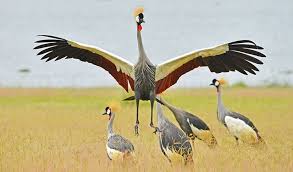
Your full day in Lake Mburo begins with dawn birding when nightjars including Slender-tailed Nightjar and Square-tailed Nightjar hawk insects over grasslands. Morning sessions focus on lakeshore areas for waterbirds including Saddle-billed Stork, African Wattled Lapwing, Long-toed Lapwing, Grey Crowned Crane, and the elusive African Finfoot in vegetated shorelines. Acacia woodland produces mixed flocks containing Rattling Cisticola, Green-capped Eremomela, various sunbirds, and the impressive Lilac-breasted Roller perched conspicuously. The day's tally of 100-120 species consolidates yesterday's sightings while adding species missed in limited afternoon time.
Day 5: Transfer to Queen Elizabeth via Ishasha Sector
Today's drive to Queen Elizabeth National Park includes extensive birding in the Ishasha sector's fig woodlands and riverine forests. Morning departure allows arrival by midday for afternoon birding targeting Ishasha specialties including Ovambo Sparrowhawk, Yellow-spotted Barbet, Double-toothed Barbet, African Green Pigeon, and the impressive Crowned Eagle. Riverine habitats host the rare African Finfoot, White-backed Night Heron, Lesser Jacana, African Pygmy Goose, while woodland edges produce Brown-throated Wattle-eye and Sooty Chat. The afternoon session typically records 60-80 species while you also search for the famous tree-climbing lions.
Day 6: Queen Elizabeth - Kazinga Channel and Mweya Peninsula
Your first full day in Queen Elizabeth begins with the spectacular Kazinga Channel boat cruise, arguably East Africa's finest waterbird experience with incredible concentrations. The cruise produces African Skimmer (seasonal), Pink-backed Pelican, Great White Pelican, Yellow-billed Stork, African Openbill, Saddle-billed Stork, and multiple kingfisher species including Giant, Malachite, Pied, Woodland, and Shining-blue Kingfisher. Waders include Long-toed Lapwing, African Wattled Lapwing, while herons including Goliath Heron, Black-headed Heron, and Squacco Heron line the banks. Afternoon birding on Mweya Peninsula adds raptors, Yellow-throated Longclaw, Black-headed Gonolek, and numerous weavers, with daily totals reaching 120-140 species.
Day 7: Kasenyi Plains and Maramagambo Forest
Morning birding on Kasenyi Plains targets the rare Shovel-billed Kite (seasonal December-March), Pin-tailed Whydah displaying, Red-chested Sunbird, Rufous-naped Lark, and African Scops Owl in day roosts. The open savannah hosts various raptors including Martial Eagle, Bateleur, and during migration, Lesser Kestrel and European Bee-eater in huge flocks. Afternoon focus shifts to Maramagambo Forest for the extremely rare Nahan's Francolin, White-naped Pigeon, Jameson's Wattle-eye, Forest Robin, Blue-shouldered Robin-chat, and Red-chested Owlet. The Bat Cave attracts African Palm Swift, Mottled Swift, and specialized raptors including Bat Hawk hunting emerging bats at dusk.
Day 8: Queen Elizabeth to Kibale via Crater Lakes
Today's transfer to Kibale Forest includes strategic birding stops in the spectacular crater lakes region with unique montane habitat. Crater areas host Scarlet-chested Sunbird, Bronze Sunbird, African Harrier-Hawk, Grey Kestrel, and African Black Duck on highland lakes. Forest patches may produce Ross's Turaco, Black-billed Turaco, while rocky areas occasionally harbor the impressive Verreaux's Eagle-Owl. Arrival at Kibale in afternoon allows evening birding around your lodge where Grey Parrot flies to roost and African Wood Owl begins calling at dusk.
Day 9: Kibale Forest National Park - Full Day Forest Birding
Kibale's 375+ species include numerous specialties requiring full-day coverage of different forest trails and elevations. Morning targets include the stunning Green-breasted Pitta (seasonal migrant October-March), African Pitta, Yellow-spotted Barbet, Grey-winged Robin-chat, White-naped Pigeon, and Black-eared Ground Thrush. Canopy species include Purple-breasted Sunbird, Blue-headed Sunbird, Black Bee-eater, while mixed flocks contain Grey-headed Negrofinch, Grey-headed Sunbird, Brown Illadopsis, and various greenbuls. The productive day typically yields 100-130 species in pristine rainforest also hosting habituated chimpanzees.
Day 10: Bigodi Wetland and Transfer to Semuliki
Morning birding at Bigodi Wetland Sanctuary targets papyrus specialists including White-winged Warbler, Papyrus Gonolek, Great Blue Turaco, and numerous weavers and bishops in marsh edges. The community-managed sanctuary produces 80-100 species in morning sessions including forest edge species missed in Kibale's interior. Afternoon transfer westward to Semuliki National Park passes through varied habitats adding roadside species. Evening arrival at Semuliki allows night birding for owls including Verreaux's Eagle-Owl and various nightjars.
Day 11: Semuliki National Park - Ituri Forest Extension Species
Semuliki represents Uganda's only true lowland tropical forest, harboring West African Congo Basin species found nowhere else in East Africa. Target specialties include the rare Nkulengu Rail, Congo Serpent Eagle, Lyre-tailed Honeyguide, Red-billed Dwarf Hornbill, Black Dwarf Hornbill, and White-crested Hornbill. The forest trails produce Red-thighed Sparrowhawk, Capuchin Babbler, Maxwell's Black Weaver, and various greenbuls and illadopsis species. The incredibly productive full day typically records 80-120 species with numerous additions representing Congo Basin affinities.
Day 12: Semuliki to Fort Portal and Royal Mile Budongo
Morning departure from Semuliki includes birding the Sempaya Hot Springs area for remaining forest species before the long drive toward Budongo Forest. En route birding stops add roadside species while the scenic drive through tea plantations and villages provides cultural insights. Late afternoon arrival at Budongo's Royal Mile allows evening preparation for tomorrow's intensive birding targeting this famous location's incredible specialties including Puvel's Illadopsis.
Day 13: Budongo Forest - Royal Mile Full Day
The Royal Mile represents Uganda's premier forest birding destination with the highest probability for rare and localized species. Morning targets include the near-mythical Puvel's Illadopsis (heard more than seen), Chocolate-backed Kingfisher, Nahan's Francolin, White-thighed Hornbill, and Yellow-mantled Weaver. Canopy species include Red-headed Malimbe, Yellow-crested Woodpecker, Cassin's Spinetail, Fire-crested Alethe, and Grey-headed Sunbird. Mixed feeding flocks require patient observation as they may contain 20-30 species, with the day's intensive work typically producing 100-130 species including several heard-only skulkers.
Day 14: Budongo to Murchison Falls National Park
Morning departure from Budongo includes final birding along productive forest trails before driving to nearby Murchison Falls. Afternoon arrival allows visiting the spectacular Top of the Falls where the Nile explodes through a 7-meter gorge. Cliffsides host Rock Pratincole, Red-throated Bee-eater colonies, African Palm Swift, and Mottled Swift, while surrounding woodland produces Northern Carmine Bee-eater (seasonal). Evening game drive toward your lodge adds savannah species including Abyssinian Ground Hornbill, Secretary Bird, and various raptors.
Day 15: Murchison Falls - Nile River Boat and Buligi Circuit
The morning Nile boat cruise from Paraa to the falls base provides exceptional waterbird viewing including African Skimmer (seasonal), Rock Pratincole, numerous kingfisher species, Goliath Heron, African Darter, and White-faced Whistling Duck. Riverbanks host massive Nile crocodiles and hippo pods while cliffs near the falls support bee-eater and swift colonies. Afternoon birding on the Buligi circuit targets northern savannah species including Denham's Bustard, Red-throated Bee-eater, Dark Chanting Goshawk, and possibly the rare Fox Kestrel. The productive day typically yields 100-120 species across aquatic and savannah habitats.
Day 16: Murchison Falls to Kidepo Valley National Park
Today involves Uganda's longest single-day drive (10-12 hours) from Murchison through increasingly remote Karamoja landscapes to Kidepo Valley National Park. The journey itself provides birding opportunities at roadside stops where species composition shifts from moist savannah to dry-country specialists. Rest stops in towns like Gulu and Kotido allow leg-stretching while observing cultural aspects of northern Uganda. Late afternoon arrival at Kidepo allows settling into accommodation and perhaps a brief evening game drive adding first northern species to your growing list.
Day 17: Kidepo Valley National Park - Narus Valley
Your first full day in Kidepo focuses on the Narus Valley's permanent water sources that concentrate both wildlife and birds. Northern specialists include Kori Bustard (Africa's heaviest flying bird), Ostriches, Secretary Bird, Abyssinian Roller, Northern Carmine Bee-eater (seasonal), and the rare Jackson's Hornbill. Raptors include Verreaux's Eagle, Martial Eagle, Dark Chanting Goshawk, Pygmy Falcon, and Fox Kestrel on termite mounds. The valley's diverse habitats produce 120-150 species with many representing significant northern Uganda specialties unavailable elsewhere.
Day 18: Kidepo Valley - Kidepo River and Apoka Area
Morning birding explores the remote Kidepo River valley along the South Sudan border, targeting species favoring drier habitats. The Borassus palm-lined river attracts Abyssinian Ground Hornbill, various starlings, and the spectacular Karamoja Apalis (endemic to this region). Open plains host Common Ostrich, Kori Bustard, various larks including Chestnut-backed Sparrow-Lark, and during migration, numerous Palearctic species. Afternoon focus on Apoka area wetlands adds waterfowl and waders, with daily totals reaching 100-130 species including dry-country specialists.
Day 19: Kidepo to Gulu with Roadside Birding
The long return journey south toward Gulu includes strategic birding stops at varied habitats producing species composition changes as you leave Karamoja's arid zone. Roadside wetlands may host African Snipe, various egrets and herons, while cultivation zones attract quelea flocks, bishops, and weavers. Rest stops in Kitgum or Gulu allow urban birding for introduced species and commensals. Overnight in Gulu positions you for tomorrow's transfer toward the Albertine Rift mountains.
Day 20: Transfer to Bwindi via Echuya Forest
Today's long drive from Gulu to Bwindi includes crucial morning birding at Echuya Forest, one of Uganda's largest montane forests. Echuya hosts the rare Red-collared Mountain Babbler traveling in noisy flocks, Grauer's Swamp Warbler in marshy areas, Doherty's Bush-shrike, and good numbers of Ruwenzori Turaco and Chubb's Cisticola in bamboo. Mixed flocks contain Black-throated Apalis, Mountain Yellow Warbler, and Stuhlmann's Double-collared Sunbird. The productive morning session records 60-80 species before continuing to Bwindi, arriving late afternoon.
Day 21: Bwindi Impenetrable Forest - Albertine Endemics Day 1
Your first full day targets Bwindi's incredible concentration of 23 Albertine Rift endemics through intensive forest trekking. Priority species include African Green Broadbill, Grauer's Rush Warbler, Shelley's Crimsonwing, Ruwenzori Turaco, and several sunbirds including Blue-headed, Regal, and Purple-breasted Sunbird. Mid-elevation targets include Rwenzori Batis, Collared Apalis, Mountain Masked Apalis, Short-tailed Warbler, and Archer's Ground Robin. Mixed flocks require patient observation for White-bellied Robin-chat, Red-faced Woodland Warbler, and multiple greenbul species, with the challenging day typically producing 80-110 species including 12-16 endemics.
Day 22: Bwindi Impenetrable Forest - Albertine Endemics Day 2
Day two explores different trails and elevations targeting endemics missed yesterday and consolidating previous sightings. High-elevation bamboo zones host Dwarf Honeyguide, Strange Weaver, Dusky Crimsonwing, and the rare Grauer's Warbler. Additional targets include Bar-tailed Trogon, Fraser's Eagle-Owl (sometimes roosting accessibly), Kivu Ground Thrush (scarce), and Chubb's Cisticola in bamboo stands. Afternoon sessions work forest edges for Yellow-eyed Black Flycatcher, Montane Oriole, Purple-breasted Sunbird, and Lagden's Bush-shrike, adding 70-100 species and completing your endemic checklist.
Day 23: Bwindi to Mgahinga Gorilla National Park
Morning transfer to Mgahinga Gorilla National Park in Uganda's southwestern corner provides different high-elevation habitat and several specialties. En route birding through Kisoro highlands adds Mackinnon's Shrike, Mountain Yellow Warbler, and Fan-tailed Widowbird. Mgahinga's bamboo and montane forests host Rwenzori Double-collared Sunbird, Dusky Turtle Dove, Olive Woodpecker, and Olive Pigeon. Afternoon sessions target Alpine Chat (requires hiking to moorland elevations above 3,500m), Scarlet-tufted Malachite Sunbird, and Streaky Seedeater, recording 50-70 species in spectacular volcanic scenery.
Day 24: Mgahinga High Elevation Birding and Return toward Entebbe
Early morning ascent into Mgahinga's high-elevation zones targets afro-alpine species including Alpine Chat, Scarlet-tufted Malachite Sunbird at giant lobelia flowers, and Archer's Ground Robin in rocky areas. The challenging hike through bamboo yields final endemic opportunities including any missed Shelley's Crimsonwing or high-elevation specialists. After descending and checking out, you'll begin the long drive back toward Entebbe, with roadside stops adding casual observations while you process the incredible endemic success of recent days.
Day 25: Final Morning Birding and Departure
Depending on flight schedules, you might enjoy final morning birding at Entebbe Botanical Gardens or nearby wetlands, consolidating common species and perhaps adding a few final ticks. Morning hours allow relaxed birding without pressure, photographing species seen poorly earlier, and enjoying Uganda's accessible urban birds. After breakfast and final preparations, you'll transfer to Entebbe International Airport for departure, carrying memories of an extraordinary 25-day journey recording 650-750+ species across Uganda's incredible diversity of habitats, having witnessed all 24 Albertine Rift endemics, countless specialties, and experiencing why Uganda deserves its reputation as Africa's premier birding destination.