
Day 1: Arrival in Entebbe and Botanical Gardens Birding
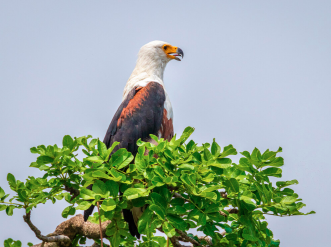
Upon arrival at Entebbe International Airport, you'll transfer to your hotel and begin your birding adventure with an afternoon visit to the Entebbe Botanical Gardens, a 40-hectare paradise along the shores of Lake Victoria. This accessible site offers excellent opportunities to spot species such as the African Grey Parrot, Great Blue Turaco, Ross's Turaco, and the striking Palm Nut Vulture perched in the towering trees. The gardens are also home to vibrant sunbirds including the Variable Sunbird and Collared Sunbird, while the lake shore attracts African Fish Eagles and various water birds. You'll likely encounter the noisy Grey-headed Kingfisher and the Black-and-white-casqued Hornbill feeding in the fruiting trees. This gentle introduction allows you to acclimatize while ticking off your first 30-40 species and preparing for the exciting days ahead.
Day 2: Mabamba Swamp - Shoebill Quest
Today you'll embark on an early morning excursion to Mabamba Swamp, one of the most reliable places in the world to see the prehistoric-looking Shoebill stork in its natural papyrus habitat. You'll glide through the swamp channels in a traditional dugout canoe, searching for this elusive bird while also encountering Blue-breasted Bee-eaters, Malachite Kingfishers, and African Jacanas walking on floating vegetation. The swamp hosts specialized species including the White-winged Warbler, Papyrus Gonolek (heard more often than seen), Northern Brown-throated Weaver, and the stunning Papyrus Yellow Warbler. Raptors such as the African Marsh Harrier patrol the skies, while egrets, herons including the Goliath Heron, and the Squacco Heron hunt in the shallows. After your successful shoebill encounter and recording 40-50 species, you'll return to Entebbe for lunch and an afternoon at leisure.
Day 3: Transfer to Murchison Falls via Budongo Forest
Departing Entebbe, you'll drive north toward Murchison Falls National Park with a crucial stop at Budongo Forest, Uganda's largest mahogany forest and a premier birding destination. Budongo is famous for the rare Puvel's Illadopsis, Chocolate-backed Kingfisher, White-thighed Hornbill, and the stunning Nahan's Francolin, one of Africa's most elusive ground birds. The Royal Mile and nearby trails offer exceptional opportunities to see forest specialists including the Yellow-mantled Weaver, Red-headed Malimbe, Yellow-crested Woodpecker, and Cassin's Spinetail overhead. You'll spend 3-4 hours birding the forest trails where mixed feeding flocks may include Fire-crested Alethe, Grey-headed Sunbird, and various greenbuls and bulbuls. After recording 60-80 species and possibly encountering chimpanzees as a bonus, you'll continue to your lodge near Murchison Falls for dinner and overnight.
Day 4: Murchison Falls National Park - Savannah Birding
Today focuses on the spectacular savannah and woodland birds of Murchison Falls, beginning with an early morning game drive through the Buligi circuit and surrounding areas. Northern Uganda specialties include the Denham's Bustard, Abyssinian Ground Hornbill stalking through the grass, Secretary Bird, and the vibrant Red-throated Bee-eater hawking insects in the morning light. Raptors are abundant, with sightings of Martial Eagle, Bateleur, Dark Chanting Goshawk, Grasshopper Buzzard, and possibly the rare Fox Kestrel perched on termite mounds. The riverine forests harbor species like the Northern Carmine Bee-eater during migration season, Yellow-fronted Tinkerbird, Speckle-fronted Weaver, and the localised Rock Pratincole along rocky shores. You'll explore different habitats including acacia woodland where you might spot the beautiful Black-headed Gonolek, and riverine vegetation where Swallow-tailed Bee-eaters nest in banks. Expect to add 70-100 species to your list while also enjoying sightings of elephants, giraffes, and other large mammals.
Day 5: Nile River Boat Safari and Paraa Area Birding
This morning features a boat cruise on the Victoria Nile from Paraa to the base of Murchison Falls, one of Uganda's premier waterbird experiences. Along the riverbanks, you'll spot African Skimmers in season, Rock Pratincoles, White-faced Whistling Duck, Spur-winged Goose, and Egyptian Geese in large numbers. The cruise offers excellent opportunities for kingfisher species including Giant Kingfisher, Pied Kingfisher, and Shining-blue Kingfisher, while Goliath Herons, African Darters, and African Spoonbills feed in the shallows. The dramatic cliffs near the falls host colonies of Red-throated Bee-eaters and numerous swifts including Mottled and African Palm Swifts. In the afternoon, you'll bird around the Paraa area and delta region, seeking specialties like the Grey-crowned Crane, Senegal Thick-knee, and Northern Red Bishop in riverside marshes. The productive day should yield 50-70 additional species including possible sightings of the nomadic Black-winged Pratincole.
Day 6: Transfer to Kibale Forest via Albertine Rift Escarpment
Today's journey south toward Kibale Forest offers birding opportunities along the dramatic Albertine Rift escarpment with spectacular scenic views. En route stops in varied habitats may produce species such as the African Pied Wagtail, Common Stonechat, Baglafecht Weaver, and Speckled Mousebird in cultivated areas. The escarpment forests can harbor Ross's Turaco, Black-billed Turaco, and various raptors including the Augur Buzzard soaring on thermals. You'll pass through tea plantations where Capped Wheatear and Mountain Yellow Warbler occur, while wetland stops might reveal African Snipe and Yellow-billed Duck. Upon arrival at Kibale in the afternoon, you'll have time for an evening birding session around your lodge, potentially spotting Grey Parrot flying to roost and hearing the calls of African Wood Owl and Fraser's Eagle-Owl as darkness falls.
Day 7: Kibale Forest National Park - Full Day Birding
Kibale Forest, with over 375 recorded bird species, offers a full day of exceptional forest birding targeting Albertine Rift endemics and forest specialists. The morning walk along Bigodi Trail or Kanyanchu might produce the stunning Green-breasted Pitta (seasonal migrant), African Pitta, Yellow-spotted Barbet, Grey-winged Robin-chat, and the elusive White-naped Pigeon. Kibale's specialties include the African and Green-breasted Pittas, Purple-breasted Sunbird, Blue-headed Sunbird, Black Bee-eater, and the forest canopy-dwelling Black-eared Ground Thrush. Mixed species flocks often contain Grey-headed Negrofinch, Grey-headed Sunbird, Brown Illadopsis, and various greenbuls including Yellow-whiskered and Honeyguide Greenbul. The afternoon session in Bigodi Wetland Sanctuary adds wetland species like White-winged Warbler, Papyrus Gonolek (with luck), Great Blue Turaco, and numerous weavers and bishops. This productive day in pristine rainforest should add 80-120 species to your trip list while also offering encounters with chimps and other primates.
Day 8: Kibale to Queen Elizabeth National Park via Crater Lakes
Departing Kibale, you'll bird your way south through the stunning crater lakes region, a landscape of ancient volcanic craters now filled with lakes surrounded by unique habitat. The crater lake areas harbor species like the African Harrier-Hawk, Scarlet-chested Sunbird, Bronze Sunbird in highland areas, and Grey Kestrel hunting over open grasslands. Stops at various craters may produce African Black Duck, Rufous-chested Swallow nesting in cliffs, and the impressive Verreaux's Eagle-Owl in rocky areas. Upon reaching Queen Elizabeth National Park in the afternoon, you'll bird the Mweya Peninsula and surrounding acacia woodland for species including Martial Eagle, Black-chested Snake Eagle, and colorful Yellow-throated Longclaw. The explosion crater areas host Temminck's Courser (nocturnal but sometimes seen at dusk), and the woodland edge attracts Arrow-marked Babbler, White-browed Coucal, and various weavers. Evening birding around Kazinga Channel may reveal African Skimmers (seasonal), Water Thick-knee, and thousands of waterbirds coming to roost.
Day 9: Kazinga Channel Boat Cruise and Kasenyi Plains
Today begins with an early morning boat cruise on Kazinga Channel, arguably Uganda's best waterbird spectacle with incredible concentrations and diversity. The cruise reliably produces African Skimmer colonies (seasonal), Yellow-billed Stork, Pink-backed Pelican, Great White Pelican, African Openbill, and Saddle-billed Stork feeding in the shallows. Kingfisher enthusiasts will delight in Giant Kingfisher, Malachite Kingfisher, Pied Kingfisher, and Woodland Kingfisher, while numerous herons including Black-headed Heron and Grey Heron line the banks. The channel's shores attract Long-toed Lapwing, African Wattled Lapwing, Spur-winged Lapwing, and Common Sandpiper among other waders. After the cruise, you'll explore the Kasenyi Plains for savannah species including the rare Shovel-billed Kite (in season), Pin-tailed Whydah displaying, Red-chested Sunbird, and possibly the nomadic Grey-rumped Swallow. The afternoon session focuses on acacia woodland where you might find African Scops Owl, Verreaux's Eagle-Owl in day roosts, and flocks containing Rattling Cisticola and various weavers, with a day total of 80-100 species.
Day 10: Ishasha Sector - Tree-Climbing Lions Area
Today you'll explore the southern Ishasha sector of Queen Elizabeth, famous for tree-climbing lions but also excellent for birding with different habitat and species. The fig tree woodlands harbor specialties like the Ovambo Sparrowhawk, Palm-nut Vulture, and various barbets including the Yellow-spotted and Double-toothed Barbet calling from canopy perches. The Ishasha River and surrounding floodplains attract African Finfoot (rare but possible), White-backed Night Heron, Lesser Jacana, and African Pygmy Goose in suitable habitat. Open grasslands host flocks of Wattled Lapwing, Black-winged Lapwing, and seasonal visitors like European Bee-eater and Lesser Kestrel during migration periods. The riverine forests provide opportunities for African Green Pigeon, Brown-throated Wattle-eye, Sooty Chat, and the impressive Crowned Eagle hunting monkeys overhead. This full day of birding in diverse Ishasha habitats typically yields 60-80 species including potential rarities like the Grey-rumped Swallow and Black-winged Pratincole in appropriate seasons.
Day 11: Maramagambo Forest and Transfer to Bwindi
This morning features birding in Maramagambo Forest, part of Queen Elizabeth National Park and home to various forest specialists before transferring to Bwindi. The forest trails offer opportunities for Nahan's Francolin (rare), White-naped Pigeon, Jameson's Wattle-eye, Forest Robin, and the secretive Red-chested Owlet often heard giving its distinctive trill. The Bat Cave area attracts African Palm Swift, Mottled Swift, and raptors including African Hobby and Bat Hawk hunting bats at dusk. Along the forest edge, look for Brown-eared Woodpecker, Buff-spotted Flufftail (heard more than seen), Blue-shouldered Robin-chat, and various sunbirds feeding in flowering trees. After a productive morning session, you'll begin the scenic drive to Bwindi Impenetrable National Park through the Kigezi Highlands, with roadside stops producing highland species like Cinnamon-chested Bee-eater and Brown Woodland Warbler. Upon arrival at Bwindi in late afternoon, you'll have time to bird around your lodge where species like Ruwenzori Nightjar, Handsome Francolin calling at dusk, and Mountain Robin-chat may be encountered, adding 40-60 species to your day list.
Day 12: Bwindi Impenetrable Forest - Albertine Rift Endemics I
Today marks the beginning of intensive birding in Bwindi Impenetrable National Park, Africa's premier destination for Albertine Rift endemic birds with 23 of the 24 endemics present. Your full-day birding excursion along trails like the Mubwindi Swamp Trail, Buhoma Waterfall Trail, or Bamboo Zone targets critically sought-after species including the African Green Broadbill, Grauer's Rush Warbler in swampy areas, and the stunning Shelley's Crimsonwing. The forest canopy hosts Ruwenzori Turaco, Handsome Francolin, and several sunbird species including Blue-headed Sunbird, Regal Sunbird, and Purple-breasted Sunbird gleaming in shafts of sunlight. Mid-elevation forests provide habitat for Rwenzori Batis, Collared Apalis, Mountain Masked Apalis, Short-tailed Warbler, and the vocal Archer's Ground Robin. Mixed feeding flocks may contain White-bellied Robin-chat, Red-faced Woodland Warbler, Mountain Illadopsis, and various greenbuls including Mountain, Stripe-breasted, and Sharpe's Greenbul. This challenging but rewarding day in the montane forest typically produces 60-90 species including numerous Albertine endemics that exist nowhere else on Earth.
Day 13: Bwindi Impenetrable Forest - Albertine Rift Endemics II
Your second full day in Bwindi focuses on different elevations and trails to maximize endemic encounters and target species missed on Day 12. The morning session might explore the Neck Trail or Rushura area for high-elevation specialists including Dwarf Honeyguide, Kivu Ground Thrush (scarce), Strange Weaver, Dusky Crimsonwing, and the rare Grauer's Warbler. The incredible African Green Broadbill remains a priority if not yet seen, along with Fraser's Eagle-Owl, which sometimes roosts in accessible areas. Mid-morning, you'll work through different forest strata seeking Bar-tailed Trogon, Rwenzori Nightjar (sometimes seen at forest edges), and Chubb's Cisticola in bamboo zones. The afternoon explores lower elevation forests and forest edges where Yellow-eyed Black Flycatcher, Purple-breasted Sunbird, Montane Oriole, and various illadopsis species forage in the undergrowth. Additional targets include the localised Lagden's Bush-shrike, Red-throated Alethe, Doherty's Bush-shrike (rare), and Western Green Tinkerbird, with the day's effort typically adding another 50-70 species while consolidating views of endemics encountered previously.
Day 14: Bwindi to Mgahinga Gorilla National Park
Today's transfer to Mgahinga Gorilla National Park in Uganda's southwestern corner offers different habitats and several species not found in Bwindi. En route through the Kisoro region, you'll bird highland areas and wetlands where Mackinnon's Shrike, Mountain Yellow Warbler, Fan-tailed Widowbird displaying over marshes, and Wing-snapping Cisticola occur. Upon arrival at Mgahinga, situated in the Virunga Mountains at elevations up to 4,127 meters, you'll begin birding the montane forests and bamboo zones targeting high-altitude specialists. The afternoon session focuses on species like Rwenzori Double-collared Sunbird, Dusky Turtle Dove, Olive Woodpecker drumming on bamboo, and the scarce Olive Pigeon. Mgahinga's specialties include the Alpine Chat in moorland areas (higher elevations), Scarlet-tufted Malachite Sunbird hovering at giant lobelia flowers, and Streaky Seedeater in disturbed areas. The park's bamboo forests host the Rwenzori Batis and several species shared with Bwindi but worth confirming, while the dramatic volcanic landscape provides a stunning backdrop for your 40-60 species recorded today.
Day 15: Mgahinga Gorilla National Park - High Elevation Birding
Today features an early morning ascent into Mgahinga's high-elevation zones, weather permitting, targeting species found above 3,000 meters in afro-alpine habitat. The challenging hike through bamboo and hagenia forest zones up towards the volcanoes offers opportunities for high-altitude specialists including Archer's Ground Robin (more common here than Bwindi), and Red-faced Woodland Warbler. In the bamboo zones, you'll search for the rare Shelley's Crimsonwing, Blue-headed Sunbird, Cinnamon Bracken Warbler, and various cisticolas adapted to this unique habitat. If conditions allow reaching moorland areas around 3,500-4,000 meters, you might encounter the Alpine Chat, Scarlet-tufted Malachite Sunbird, and during migration, the Northern Wheatear in open grasslands. Raptors such as Augur Buzzard and Mountain Buzzard patrol the slopes, while the localised Kivu Ground Thrush might be encountered in suitable rocky habitat. After descending, the afternoon is spent birding lower elevations to consolidate species and search for any missed targets, with the strenuous but rewarding day typically adding 30-50 species and providing spectacular volcanic scenery.
Day 16: Transfer to Lake Mburo National Park via Echuya Forest
Departing Mgahinga, you'll travel northeast toward Lake Mburo with a crucial morning stop at Echuya Forest, one of Uganda's largest remaining montane forests and home to several localized species. Echuya is one of the best sites for the rare Red-collared Mountain Babbler, which travels in noisy flocks through the bamboo and forest understory. The forest also hosts Grauer's Swamp Warbler in marshy areas, Doherty's Bush-shrike (scarce), and good numbers of Ruwenzori Turaco, Cinnamon-chested Bee-eater, and Chubb's Cisticola in bamboo stands. Mixed flocks might contain Black-throated Apalis, Mountain Yellow Warbler, and various sunbirds including Stuhlmann's Double-collared Sunbird. After a productive morning session recording 40-60 species, you'll continue the drive across the highlands through cultivated landscapes where casual birding might produce African Citril, Baglafecht Weaver, and various introduced species, arriving at Lake Mburo National Park in late afternoon for a relaxed evening after the long journey.
Day 17: Lake Mburo National Park - Full Day Acacia Savannah Birding
Lake Mburo National Park protects Uganda's only acacia savannah ecosystem and hosts numerous species found nowhere else in the country's national parks. The morning game drive through acacia woodland focuses on sought-after species including the endemic Nubian Woodpecker, Red-faced Barbet, Brown Parrot, and the spectacular Bare-faced Go-away-bird calling raucously from treetops. Grassland species include Red-shouldered Cuckoo-shrike (seasonal), Rufous-naped Lark, Flappet Lark displaying overhead, and Tabora Cisticola singing from grass stems. The park's numerous lakes attract African Finfoot (rare but regularly recorded), White-backed Duck, Blue-headed Coucal, and Lesser Moorhen in papyrus edges. Afternoon birding along the lakeshore and wetland areas produces specialties like Saddle-billed Stork, African Wattled Lapwing, Grey Crowned Crane, and possible sightings of the nomadic Lesser Jacana. This productive full day in Lake Mburo's unique habitat typically yields 120-150 species, many of which are new additions to your Uganda trip list, making it an essential destination for serious birders despite its smaller size.
Day 18: Morning Birding Lake Mburo and Transfer to Entebbe
Your final morning begins with an early birding walk or drive in Lake Mburo to target any remaining species and consolidate previous sightings. The dawn hours offer excellent opportunities for nightjars including Slender-tailed Nightjar and Square-tailed Nightjar hawking insects, while Pearl-spotted Owlet might be calling from acacia trees. The productive savannah woodlands provide last chances for specialties like Lilac-breasted Roller, Crested Francolin, and the striking African Finfoot if luck has eluded you previously. After a final morning tally of 30-50 species, you'll begin the scenic 4-5 hour drive back to Entebbe, making strategic stops at the Equator monument for photos and potentially a wetland stop that might add Yellow-billed Duck, Long-toed Lapwing, or other water birds. Your extraordinary 18-day Uganda birding safari concludes with arrival at Entebbe Airport or your hotel, having recorded an impressive 550-700+ species depending on season, weather, and luck, including the majority of Uganda's Albertine Rift endemics, numerous savannah specialists, and the iconic Shoebill, cementing Uganda's reputation as Africa's premier birding destination.